Artemis II shares rare views from the moon’s far side as it begins trip back to Earth
Written by Cape Cod's X on April 8, 2026
In a milestone moment for human spaceflight, NASA’s Artemis II crew has traveled farther from Earth than any astronauts before, marking the first crewed lunar mission in more than 50 years. During their journey around the moon on April 6, 2026, the four-person team aboard the Orion spacecraft reached a record distance of 252,756 miles—surpassing the benchmark set by Apollo 13 in 1970.
The crew—commander Reid Wiseman, pilot Victor Glover, mission specialist Christina Koch, and Canadian astronaut Jeremy Hansen—spent roughly seven hours circling the moon, coming within about 4,067 miles of its surface. Along the way, they became the first humans to directly view certain regions of the moon’s far side without instruments.
As expected, communication with Mission Control briefly dropped for about 40 minutes while the spacecraft passed behind the moon. Contact was restored later that evening without issue. The astronauts have been documenting their journey with a series of remarkable images. Among them was a striking “Earthset,” showing Earth slipping behind the lunar horizon, partially shadowed with Australia and Oceania still illuminated. Another iconic moment included a modern recreation of “Earthrise,” echoing the famous Apollo 8 photograph.
One of the most extraordinary sights came in the form of a solar eclipse visible only from their vantage point in space. The moon completely obscured the sun for nearly 54 minutes—far longer than typical eclipses seen from Earth. Astronaut Victor Glover described the scene vividly, noting the glowing corona forming “a halo almost around the entire moon … It just looks unreal. You can see the surface of the moon against the Earthshine. … You can actually see a majority of the moon. It is the strangest looking thing that you can see so much on the surface.” Reflecting on the experience, Glover added, “Because humans probably have not evolved to see what we’re seeing,” and called the moment “truly hard to describe” and “amazing.”
The crew also captured detailed views of the moon’s rugged terrain, including craters, ridges, and long shadows stretching across the boundary between lunar day and night—features made more dramatic by low-angle sunlight.
After completing its lunar flyby, the Artemis II began its trip back to Earth. The 10-day mission is expected to conclude with a splashdown in the Pacific Ocean near San Diego just after 8 p.m. EDT Friday evening. As Artemis II heads home, it not only marks a historic return to deep space exploration but also sets a new benchmark for future missions.
You can view all photos and read updates on Artemis II’s journey at www.nasa.gov.
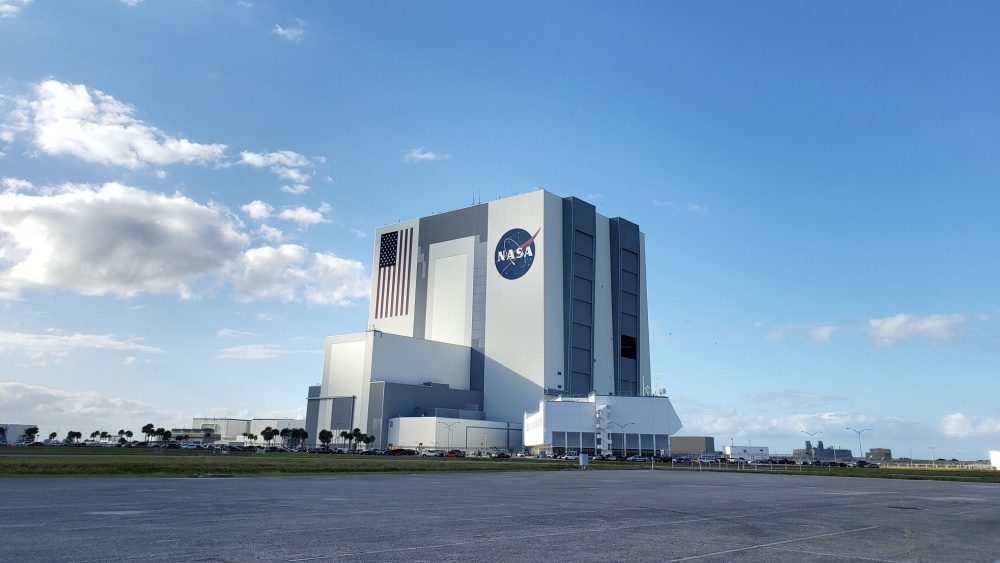
Editorial credit: 3000ad / Shutterstock.com


 WGTX HD2 The Whale Nex-Gen Classic Rock
  WGTX Acoustic Cafe